Jewel Coloring
TaTa Game Technology LimitedCasual
4.83.15K Reviews
- Version
- 1.23.1
- Installs
- 10.00M
- Age Rating
- Everyone
Screenshots
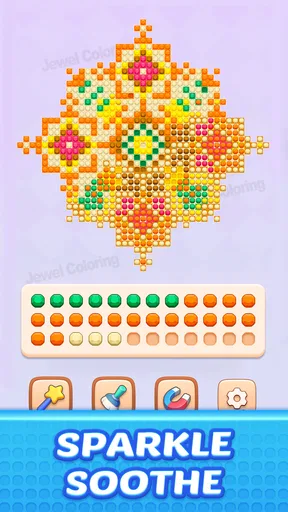
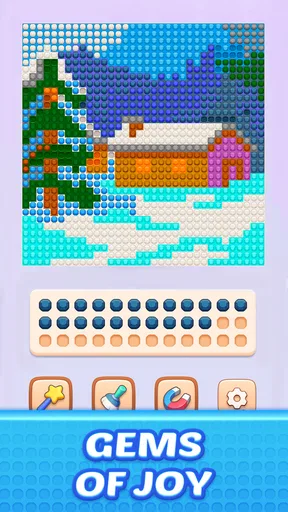
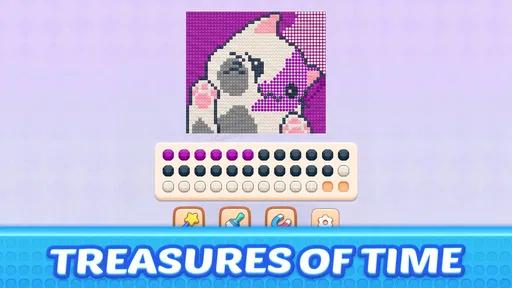
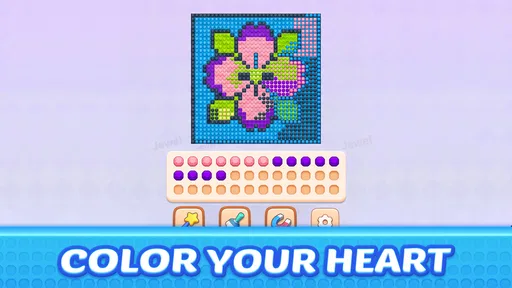
Our Review of Jewel Coloring
 Analysis by Appyee
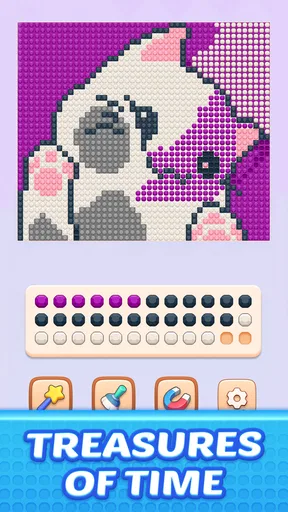
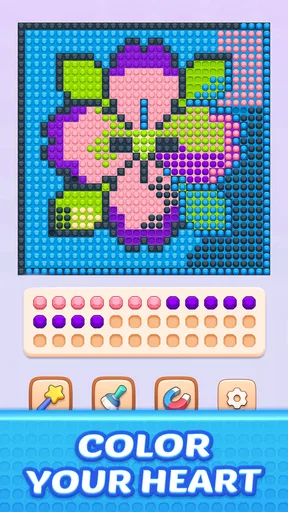
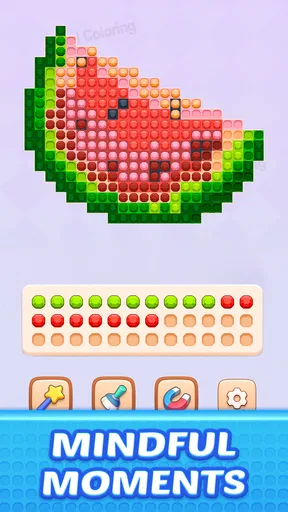
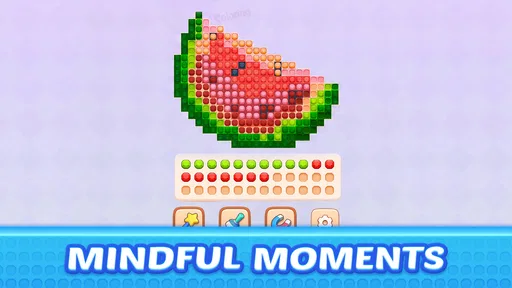
I spent time with Jewel Coloring as the kind of game I would open when I wanted something quiet rather than competitive. It sits in the casual puzzle space, but its appeal is less about racing through a board and more about turning a small sorting task into a colorful pixel-art picture. The basic idea is easy to understand almost immediately: place jewel-like pieces into the matching spaces and watch the image take shape.
That simplicity is the main reason it works. I did not need a tutorial-heavy introduction or a long explanation before starting. The first few actions communicate the rhythm clearly, which makes it approachable for younger players, older players, and anyone who prefers games that respect a short attention span. At the same time, the format gives me a small sense of completion whenever a section of the picture is filled.
How the goals and pacing feel during play
I find the goals easiest to enjoy when I treat each board as a small visual task, not a level to rush through. A quick scan for obvious placements can make a short session feel orderly, while pausing to check the emerging image helps when colors or gaps are harder to read. That balance between steady progress and gentle attention also shapes how well the game works when a device is shared.
A gentle first goal that makes the game easy to enter
The early goal is straightforward: identify where each jewel belongs and complete the image. That may sound modest, but it is a useful design choice for a relaxing game. I always know what I am trying to do, and I am not forced to learn several systems before the activity becomes enjoyable. The visual result also gives the task a clear purpose, because the board gradually changes from an unfinished pattern into a finished piece of pixel art.
I found this especially suitable for brief sessions. If I had only a few minutes while waiting for an appointment or winding down before bed, I could begin a picture without feeling that I was committing to a long level. The game’s free price also lowers the barrier to trying it, while its Everyone content rating makes the tone broadly accessible for family use.
One useful habit is to treat each picture as a small visual project instead of trying to rush every placement. I first scan for the easiest matching areas, then work through the less obvious spaces. This approach keeps the opening minutes calm and reduces the feeling of searching randomly. It also makes the gradual reveal more satisfying because I can see the image becoming recognizable rather than merely watching a counter move.
Progress is visible even when the challenge stays light
The strongest progress signal is the artwork itself. Every correct placement changes the board, so advancement is not hidden behind complicated menus or abstract experience systems. I can tell that I am moving forward because empty spaces disappear and the pixel image becomes more complete. For a casual game, that immediate visual feedback is more meaningful than a large collection of numerical rewards.
This also affects how I judge my own pace. A player who enjoys methodical work can focus on accuracy and order, while someone looking for a faster distraction can make quick matches and move on. The game does not need an elaborate achievement structure to make a completed picture feel like a result. The finished design is the reward I can actually see.
There is a small trade-off here. Players who need constant unlocks, story developments, competitive rankings, or increasingly elaborate objectives may find the progress signals too simple. The satisfaction comes from completion and appearance, not from building a character or managing a long-term account. I think that distinction matters more than the high rating might suggest: popularity does not turn this into a deep progression game.
The difficulty curve favors concentration over pressure
From my experience, the challenge is built around attention and recognition rather than reflexes. I am looking at colors, shapes, and open positions, then deciding where a piece fits. That makes the game comfortable for players who dislike timers or reaction-based puzzles. It also means the difficulty can feel personal: a board may be easy for someone familiar with pixel patterns but slower for a player who has trouble distinguishing small visual details.
The relaxed structure is a strength when I want to decompress. I can pause mentally, inspect the board, and continue without feeling punished for taking a moment. However, it is not the right match for someone searching for demanding logic puzzles or a sharply escalating challenge curve. If your ideal casual game introduces new rules, tight limits, or complex combinations, this experience may seem too gentle.
My practical advice is to avoid filling spaces purely by color at first. I look at the surrounding pattern and use the shape of the unfinished image as a second clue. This is particularly helpful when several pieces appear similar. It turns the activity from simple color matching into a more deliberate visual scan, adding a little thought without changing the peaceful character of the game.
What keeps the session going, and what does not
The retention comes mainly from the desire to finish the current picture and see the final result. That is a clean, understandable reason to continue. When I am close to completing an image, the remaining spaces naturally pull me back in, especially if I stopped with only a small section unfinished. The loop is effective because the next action is always obvious.
At the same time, the game does not appear designed around pressure. I did not approach it as a contest against other players or as a race to protect a streak. That makes it easier to recommend as a low-stress option, but it also limits its appeal for people who need social competition or strong external incentives. The experience is more like completing a series of small visual crafts than chasing a high score.
That difference is important for everyday use. If I am tired, a complicated puzzle can feel like work, while this format gives me something to do with my hands and attention without demanding intense planning. If I am alert and specifically want a difficult brain teaser, I would choose a traditional logic puzzle instead. Jewel Coloring works best in the space between passive scrolling and serious problem-solving.
A realistic use case: a short reset during a busy day
Imagine taking a break after a long stretch of messages or paperwork. I can open the game, complete part of a picture, and stop when the break ends. There is no need to remember a complicated story or reconstruct a strategy later. The unfinished artwork gives me a clear return point, and the simple matching task helps separate the break from the work that came before it.
I can also see it working well as a shared activity between an adult and a child. One person can search for matching pieces while the other watches the image develop, and the Everyone rating supports that broad audience. I would still supervise younger children in the normal way when handing over any mobile game, but the calm coloring-puzzle format is much easier to share than a fast action title.
For older users, the appeal is similarly practical. The game does not require knowledge of a fictional universe, complicated controls, or a competitive mindset. The main consideration is visual comfort: small details and close colors may be tiring for some players. Taking breaks and using a larger screen, when available, can make the sorting process more comfortable.
Where it stands beside familiar casual alternatives
Compared with match-three games, this game feels less explosive and less score-driven. There is no need to create chains or plan several moves ahead in the same way. Compared with standard coloring books, it adds a sorting puzzle layer, because I am not simply choosing any color I like; I am matching pieces to intended spaces. Compared with jigsaw apps, the image is assembled through color and pixel placement rather than by manipulating irregular puzzle pieces.
That middle position is its clearest identity. It is more interactive than passive coloring, but lighter than a demanding puzzle game. I would recommend it over a match-three title when I want a slower rhythm, and over a conventional coloring app when I want a defined task with a visible solution. I would not recommend it over a logic game for someone who measures enjoyment by difficulty or complex deduction.
The developer, TaTa Game Technology Limited, has positioned the experience as an accessible casual game rather than a specialist puzzle tool. Its broad reach reflects that approach: it has passed ten million installs, carries an average rating of 4.8 from around 164 thousand ratings, and has about 2.2 thousand written reviews. Those figures suggest that the simple loop connects with a large audience, although they should not be mistaken for proof that every player will find the pacing deep enough.
Practical details before installing
The game is free, which makes experimentation easy. I can try it without treating the first session as a purchase decision, and that is appropriate for a small relaxation game. It is available for devices running Android 6.0 or later, so compatibility is reasonably broad for many existing phones and tablets. The current version is 1.19.1, a detail worth checking against the software on a particular device before installing.
The age rating is Everyone, matching the uncomplicated presentation and family-friendly direction. I would still choose a different app if I wanted a completely open-ended art tool, because this is based on completing prepared pixel-art designs rather than freely drawing whatever comes to mind. It is also not the best choice for offline planning, language learning, or a game with a narrative objective; its purpose is narrower and more focused.
The release date is February 25, 2026, so I view it as a relatively recent entry in a familiar casual format. That makes the current version especially relevant when considering the present experience, but I would avoid assuming that future updates will transform its core identity. The central appeal is already clear: sort, place, reveal, and finish.
Small techniques that make the loop more satisfying
My first technique is to divide the board visually into zones. Instead of scanning the entire picture after every move, I concentrate on one area, complete the obvious placements there, and then move to the next. This reduces visual clutter and makes it easier to notice the final gaps. It is a simple change, but it makes the game feel more orderly.
My second technique is to use the emerging image as a confirmation tool. If a placement seems technically possible but makes the surrounding pattern look wrong, I pause and inspect nearby spaces before continuing. The picture is not just decoration; it becomes a guide. This is useful when the board contains several similar jewel colors or when the remaining spaces are scattered.
My third technique is to stop at a natural point rather than forcing completion. Because the game is built for relaxation, I do not gain much by turning a calm session into a chore. Completing one section or reaching a visually satisfying stage is a good stopping point. When I return, the unfinished board gives me a clear, low-effort way back into the activity.
These habits also reveal the main design trade-off. The game offers enough structure to support focus, but not enough complexity to demand a long strategy. That balance is excellent for short resets and less convincing for extended gaming sessions. I can enjoy it repeatedly when my goal changes from “challenge me” to “help me settle down,” but I would not expect it to replace a deeper puzzle collection.
Who should choose it, and who should pass
I think it is a strong fit for casual players who like pixel art, sorting tasks, and visible completion. It suits people who want a game that can be understood quickly, families looking for a gentle shared activity, and anyone who enjoys filling in a picture one small decision at a time. It is also a sensible option for players who find timed games stressful.
I would be more cautious about recommending it to players who need powerful long-term progression. If you want character upgrades, competitive leaderboards, elaborate unlock paths, or a story that develops between levels, this is probably too focused on the immediate artwork. Likewise, players with visual fatigue or difficulty distinguishing close colors may find the core matching task uncomfortable, even though the rules themselves are simple.
For me, the deciding question is not whether the game is entertaining in the abstract. It is whether I want a quiet, finite task. When the answer is yes, the design makes sense. When I want surprise, pressure, strategy, or social play, another casual title will serve me better.
My progression verdict
Jewel Coloring succeeds because its goals, progress signals, and pacing all point in the same direction. The immediate objective is easy to grasp, the artwork shows progress without explanation, and the difficulty emphasizes patient observation instead of pressure. Its retention is based on finishing pictures rather than forcing competition, which gives the experience a calm personality.
That focus is also its boundary. I would not describe it as a deep progression game, and I would not install it expecting a demanding challenge curve. I see it as a dependable visual reset: free, accessible, easy to share, and satisfying in short sessions. The large audience and strong average rating make it worth trying, but the best reason to keep it is more personal—whether the act of sorting jewels into a gradually revealed pixel image feels relaxing to you.
My recommendation is positive with that expectation clearly set. If you want a peaceful casual puzzle that gives you a small finished picture as a reward, I think it is worth opening. If you need ambitious goals or increasingly complex systems to stay engaged, choose a more demanding alternative. The right way to enjoy it is to treat each completed image as a quiet pause, not as a test of endurance.
Privacy and Permissions
See what permissions an app requests and how it handles your data.
- Device & app history
- retrieve running apps
- Location
- approximate location (network-based), precise location (GPS and network-based)
- Phone
- read phone status and identity
- Photos/Media/Files
- read the contents of your USB storage, modify or delete the contents of your USB storage
- Storage
- read the contents of your USB storage, modify or delete the contents of your USB storage
- Wi-Fi connection information
- view Wi-Fi connections
- Device ID & call information
- read phone status and identity
- Other
- view network connections, pair with Bluetooth devices, connect and disconnect from Wi-Fi, full network access, control vibration, prevent device from sleeping, install shortcuts, Google Play license check
Verdict
Strengths of Jewel Coloring
- Relaxing color-by-number gameplay suitable for short sessions.
- Large selection of jewel-themed pictures to complete.
- Simple controls make it accessible for most players.
- Bright visuals give finished designs an attractive sparkle.
- Works well as a casual offline pastime.
Limitations of Jewel Coloring
- Some artwork and features may require in-app purchases.
- Repeated coloring tasks can feel predictable over time.
- Ads may interrupt gameplay between coloring sessions.
- Small jewel sections can be difficult to tap accurately.
- Limited creative freedom compared with freehand coloring apps.
Other Releases by TaTa Game Technology Limited
View All
3D Bubble Shoot - ASMR Game
Casual4.9

Jewel Loop - Coloring Sort
Casual4.8
Similar Picks in This Category
View All
My Talking Angela
Outfit7 Limited4.2

My Talking Tom
Outfit7 Limited4.3

Pou
Zakeh4.2

My Talking Tom 2: Pet Game
Outfit7 Limited4.3

Candy Crush Saga
King4.6

Bridge Race
Supersonic Studios LTD4.1
Frequently Asked Questions
What is Jewel Coloring and how does the game work?
Jewel Coloring is a relaxing color-by-number puzzle game focused on creating sparkling jewel-style artwork. After selecting a picture, you fill each numbered or marked section with the matching color, gradually revealing the completed design. The gameplay is simple to understand and does not require drawing skills, making it suitable for short sessions or longer periods of casual play.
Is Jewel Coloring free to download and play?
Jewel Coloring can generally be downloaded at no initial cost, allowing players to try its main coloring activities without purchasing the app upfront. However, availability of premium pictures, optional items, advertisements, or other in-app purchases may depend on the version and platform. It is a good idea to review the store listing and purchase settings before downloading.
Can Jewel Coloring be played offline?
Many of the basic coloring activities in Jewel Coloring may be available without a continuous internet connection once the necessary content has been loaded. Nevertheless, an internet connection could still be required for downloading new artwork, displaying advertisements, synchronizing progress, or accessing special features. Offline availability can vary by device, app version, and the specific picture selected.
Is Jewel Coloring suitable for children and beginners?
Jewel Coloring is designed around straightforward color-matching mechanics, so beginners can usually start playing immediately without learning complicated controls. Children may also enjoy the bright artwork and rewarding completion effects, but parents should check the app’s age rating, advertising, privacy details, and any in-app purchase options. Younger users may benefit from supervision while using the app.
What devices are compatible with Jewel Coloring?
Compatibility depends on the edition of Jewel Coloring available for Android or iOS and the requirements listed in the relevant app store. Most recent smartphones and tablets should be able to run a lightweight coloring game, although older devices may experience limited performance or storage issues. Before installing, check the required operating-system version, available space, and developer information.
Play our best games!


